Petey the Racer Droid is a WIP eleven-function figure depicting an original robot character inspired by the car of Talladega Superspeedway Champion Pete Hamilton. I'm leading a team of ten to bring this project to life.
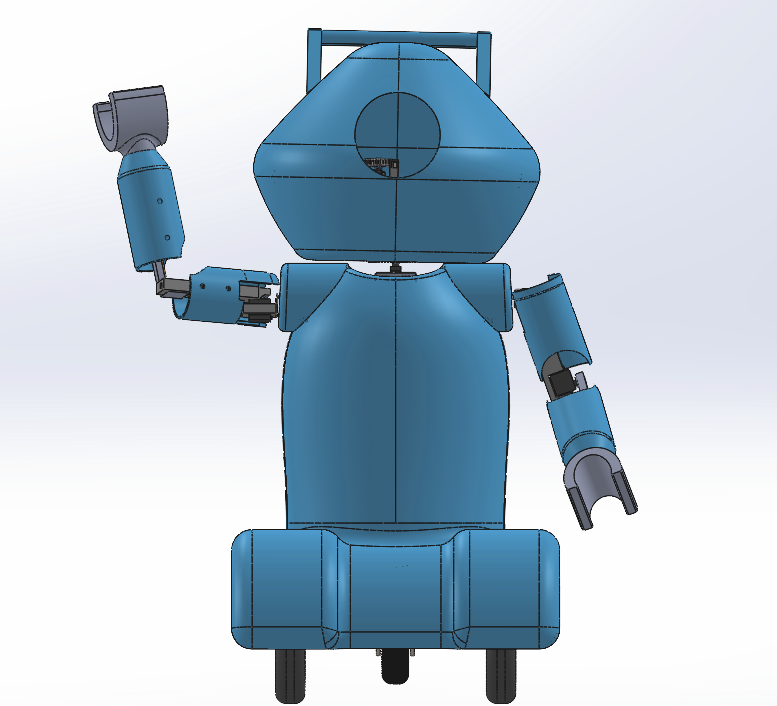
Latest CAD Model
My Role
I led the design for every aspect of this figure: from the creative design, working with the concept illustrator to get the right design, overall form of the project, such as the choice to use a mix of aluminum and PLA parts, the control system, and the CAD itself. Much of my team on this project was made up of freshmen, so I taught them how to use CAD and delegated different functions to them to design, which I then refined and integrated into manufacturable forms that worked within the greater figure. I worked on every one of the figure's functions, though those under my sole design were his arms.
I designed the shells entirely myself, with the exception of the shape of the head. I developed the way they attached to the substructure and did extensive trial-and-error testing to ensure a proper range of motion and avoidance of collisions.
I managed the fabrication of parts. Ranging from coordinating with university facilities to scheduling team members on machining tools. I am also designing the figure finishing strategy, which I will lead once all the parts are ready.
COncept Art
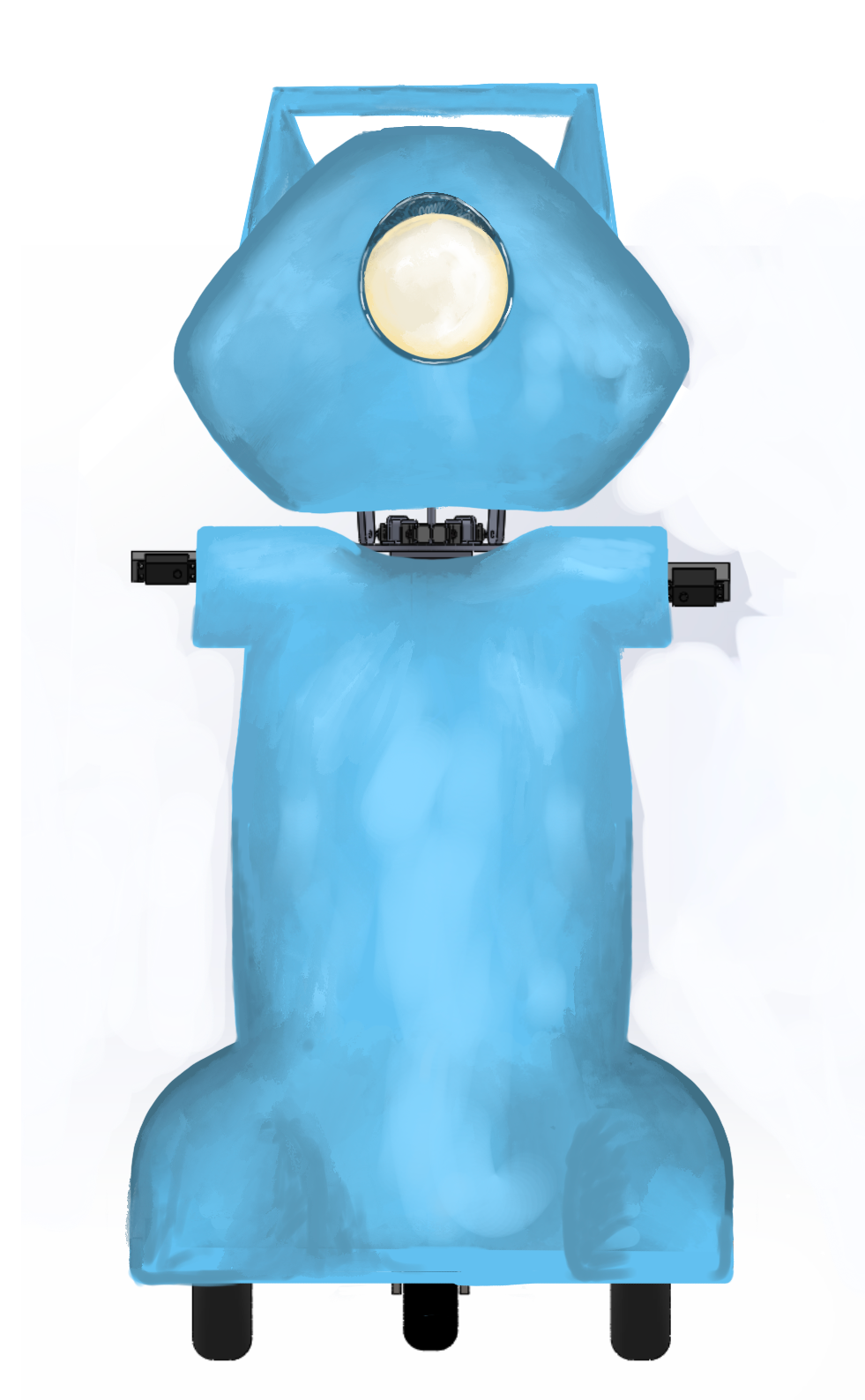
Concept Development
The idea behind this figure was to create a Sci-Fi-themed project and connect it to the state of Alabama, since this project is for a university club. From there, the idea became to design a racing droid inspired by the car of Talladega champion Pete Hamilton, with the story that Petey is an aspiring racer currently working as a race starter.
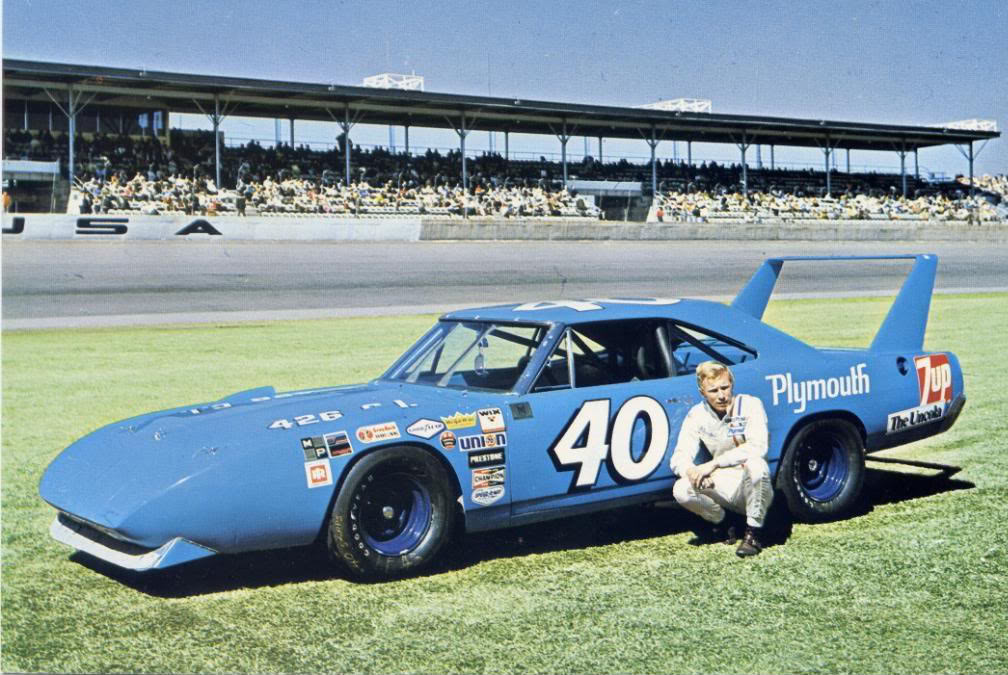
Pete Hamilton's Plymouth Superbird
Design
The figure was designed in SolidWorks. The main substructure is built around pieces of bolt-together aluminum with custom 3D-printed parts to connect the servos to the substructure.
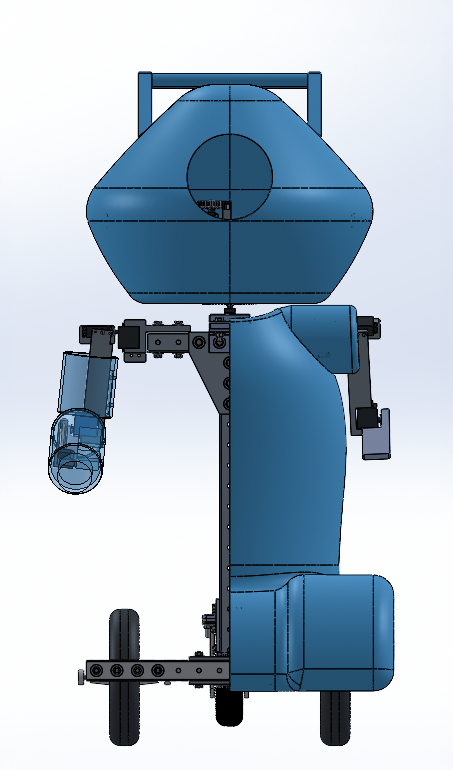
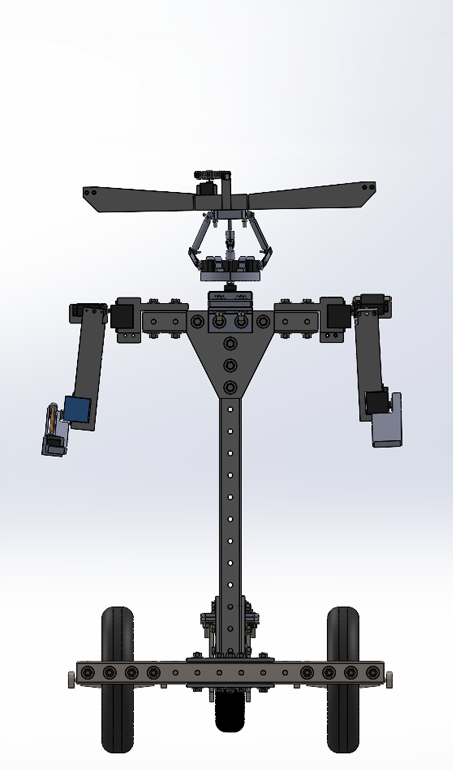
Cad Model, Shells on and Off.
Head
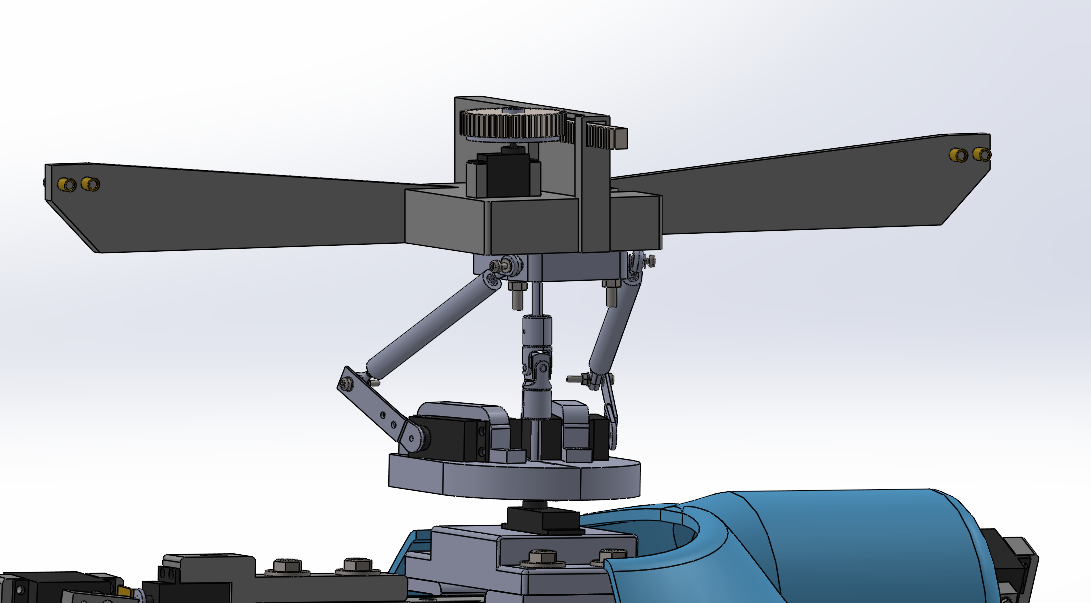
He features a three-axis neck based around a universal joint, allowing him to pitch his head up and down, tilt side to side, and rotate to look around. He also features a telescoping eye mechanism driven by a rack-and-pinion.
His head substructure features large wings so that it can connect to his head shells.
Arms
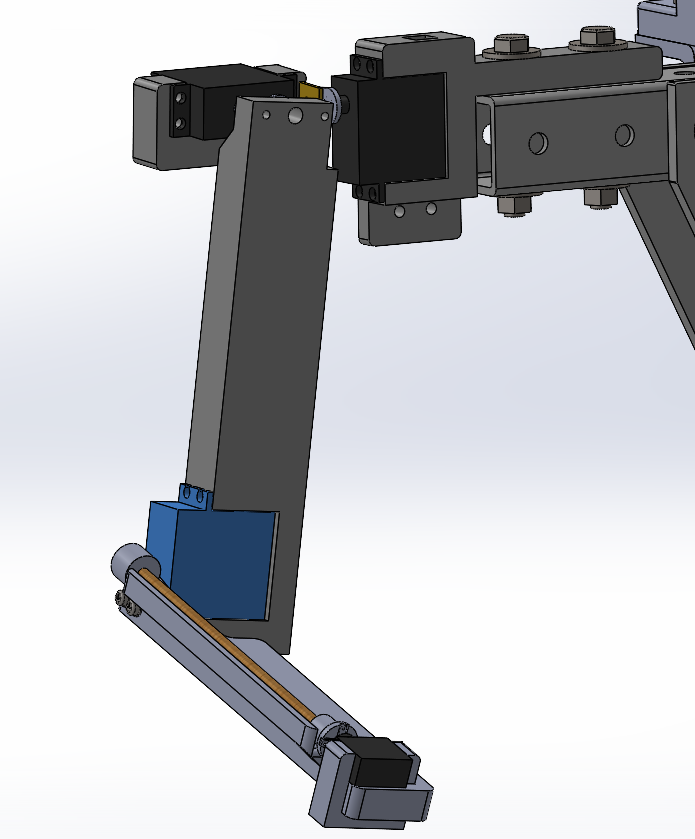
He features a two-function shoulder mechanism plus the ability to bend his bicep on each arm.
In story, he is a race starter, so he has the ability to extend and retract a checkered flag from his right forearm via a rotating shaft and guide plate, which he can wave utilizing his arm functions.
In story, he is a race starter, so he has the ability to extend and retract a checkered flag from his right forearm via a rotating shaft and guide plate, which he can wave utilizing his arm functions.
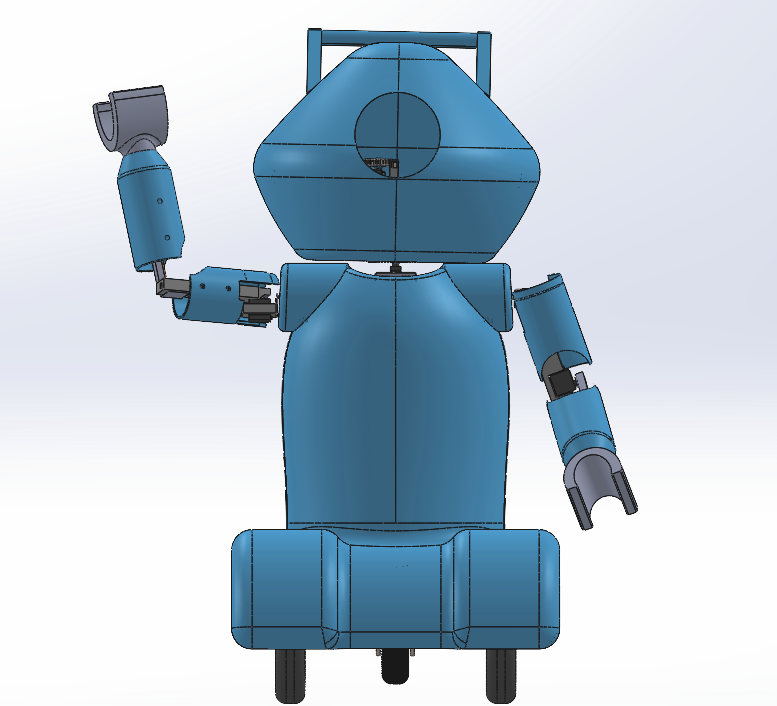
Example of motions and posing that can be achieved by his 3-function arms
Shells
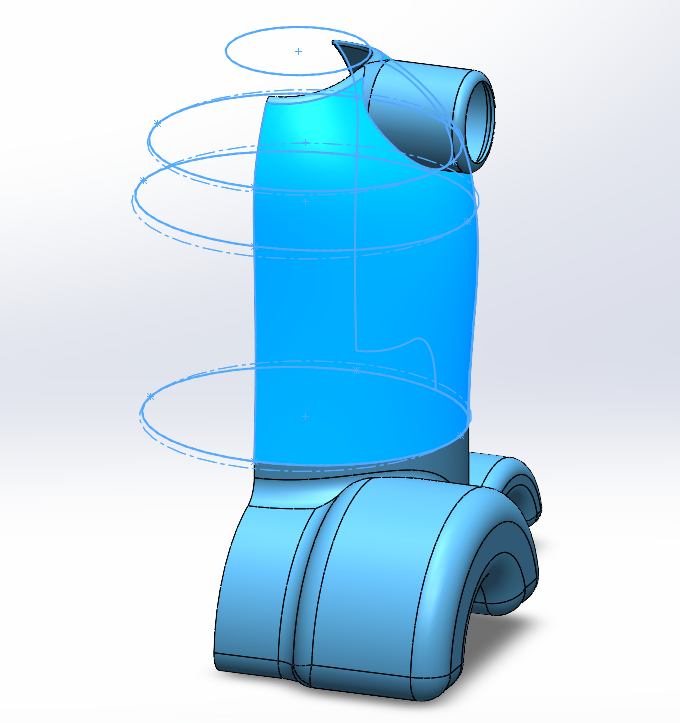
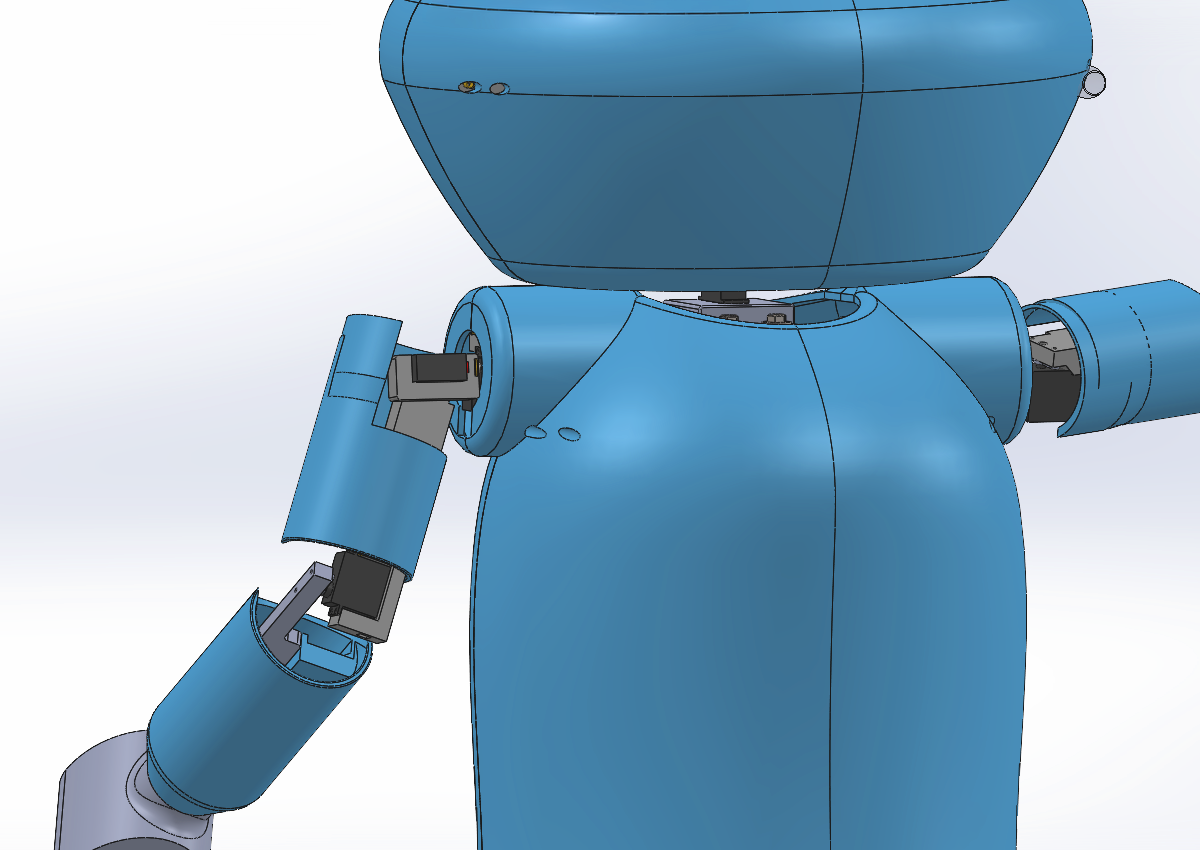
Zoom-in of Joints with surrounding shells
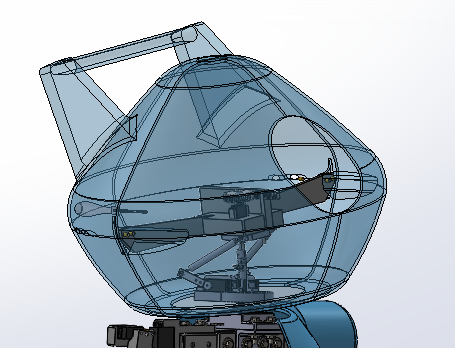
Detail of how his head attaches to the shells
His shells were designed in SolidWorks using features such as lofts to create natural shapes.
To ensure the figure could be built, digital proxies of tools, such as screwdrivers, were placed into the CAD. This made it possible to identify when certain designs were unmanufacturable and to address this in the digital design phase rather than later, when physical parts would have to be modified.
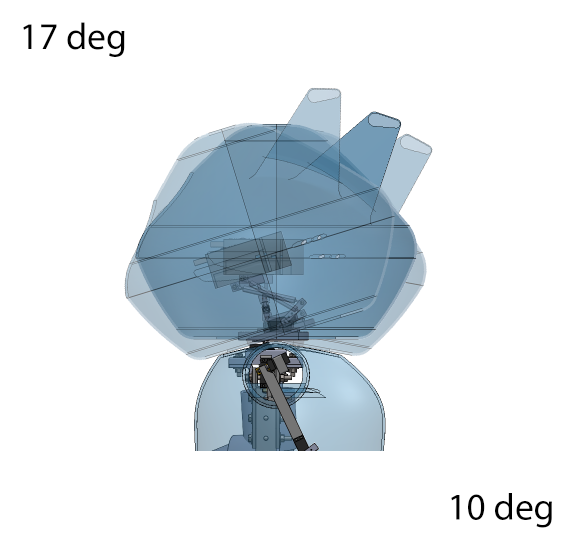
To ensure the desired range of motion, testing was conducted in Photoshop to determine how far parts could rotate before colliding with one another.
The head and body shells are each two pieces. The front piece features threaded inserts while a bolt head sits on the back half, clamping the substructure between the two shells.
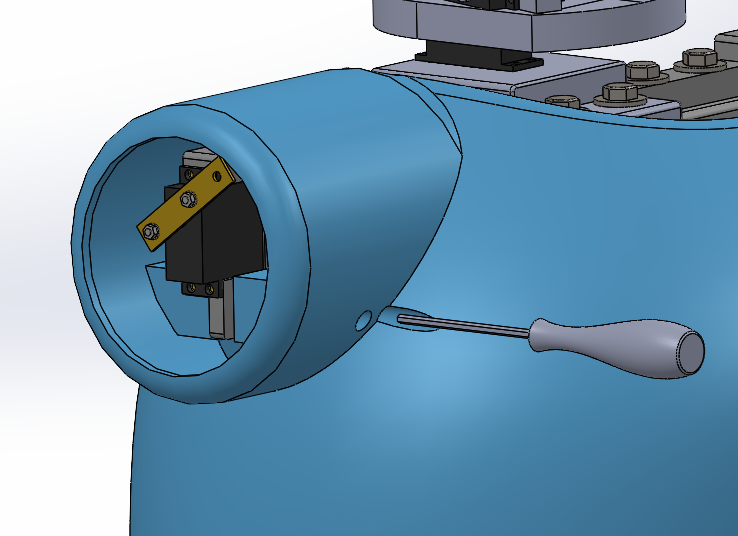
Clearance holes were placed in the back of the shell to ensure that a screwdriver can reach the screws necessary to hold the shells to the mechanical substructure.
Fabrication
Many of Petey's parts had to be cut to shape. Team Members worked to cut his aluminum substructure to length, as well as brass strips for use as servo horns, and to heat-set threaded inserts into 3D-printed parts. Many of his 3D-printed parts, such as his shells, are too large to be printed at once; these needed to be printed in sections, which were then welded together.
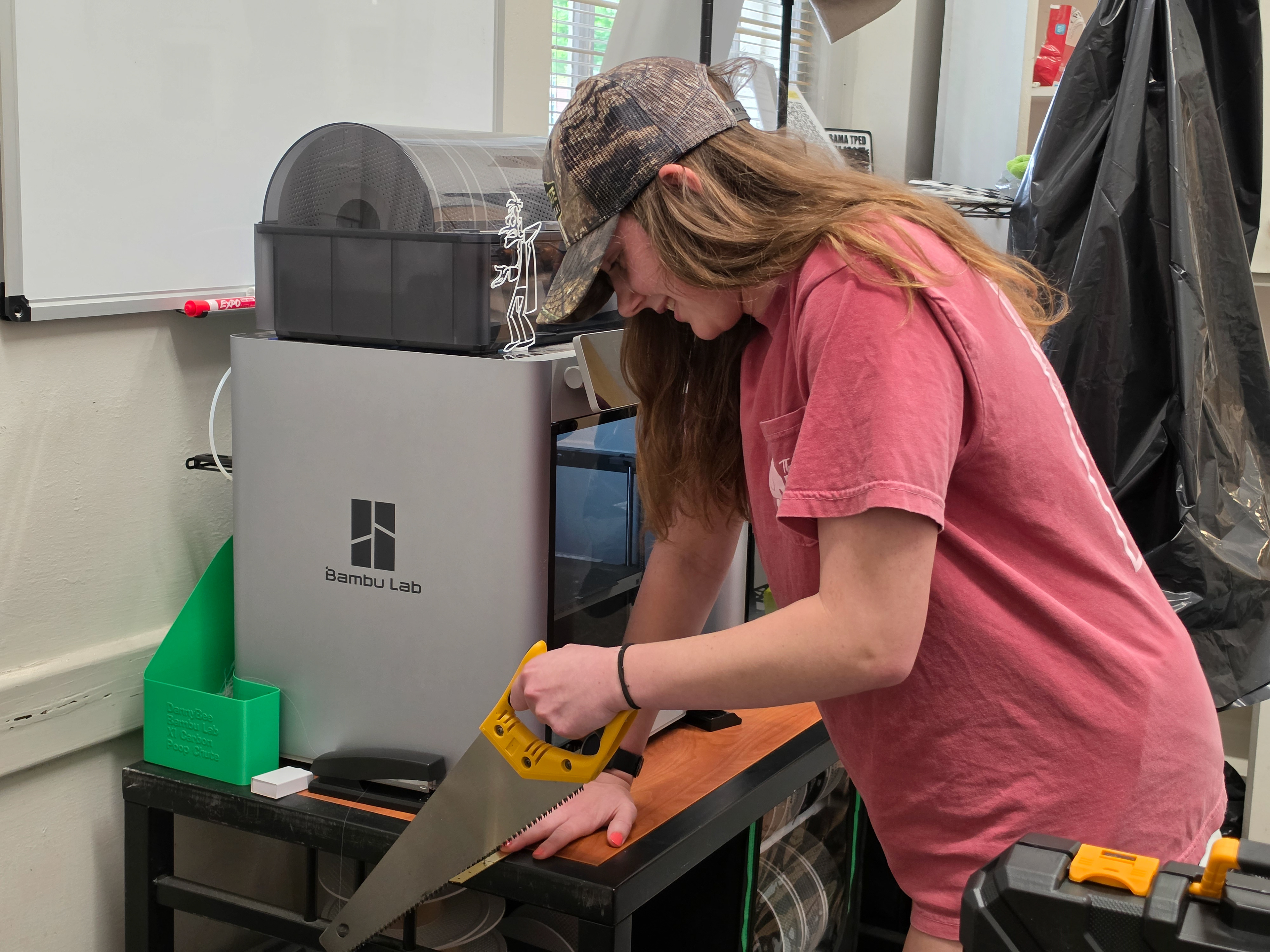
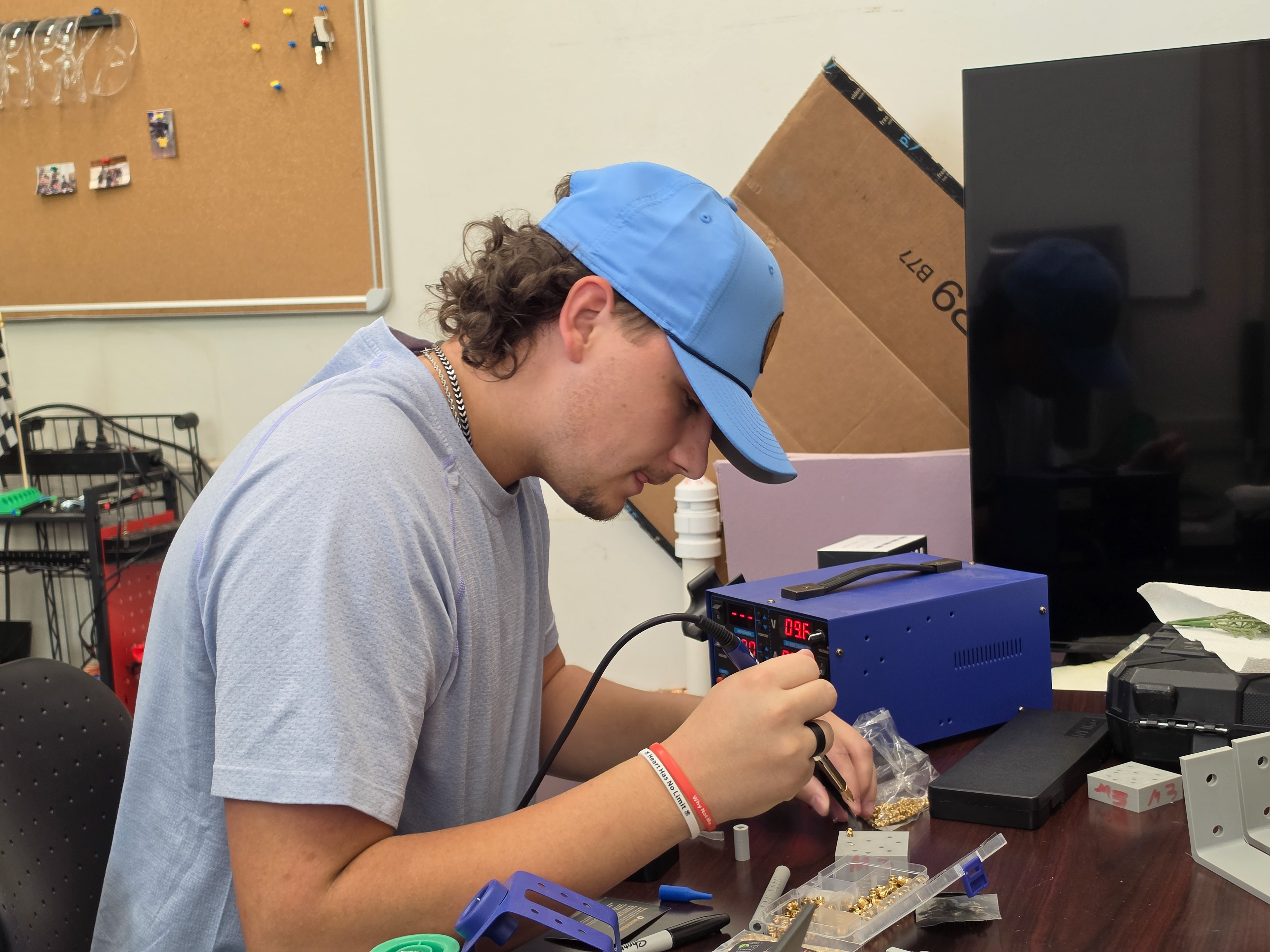
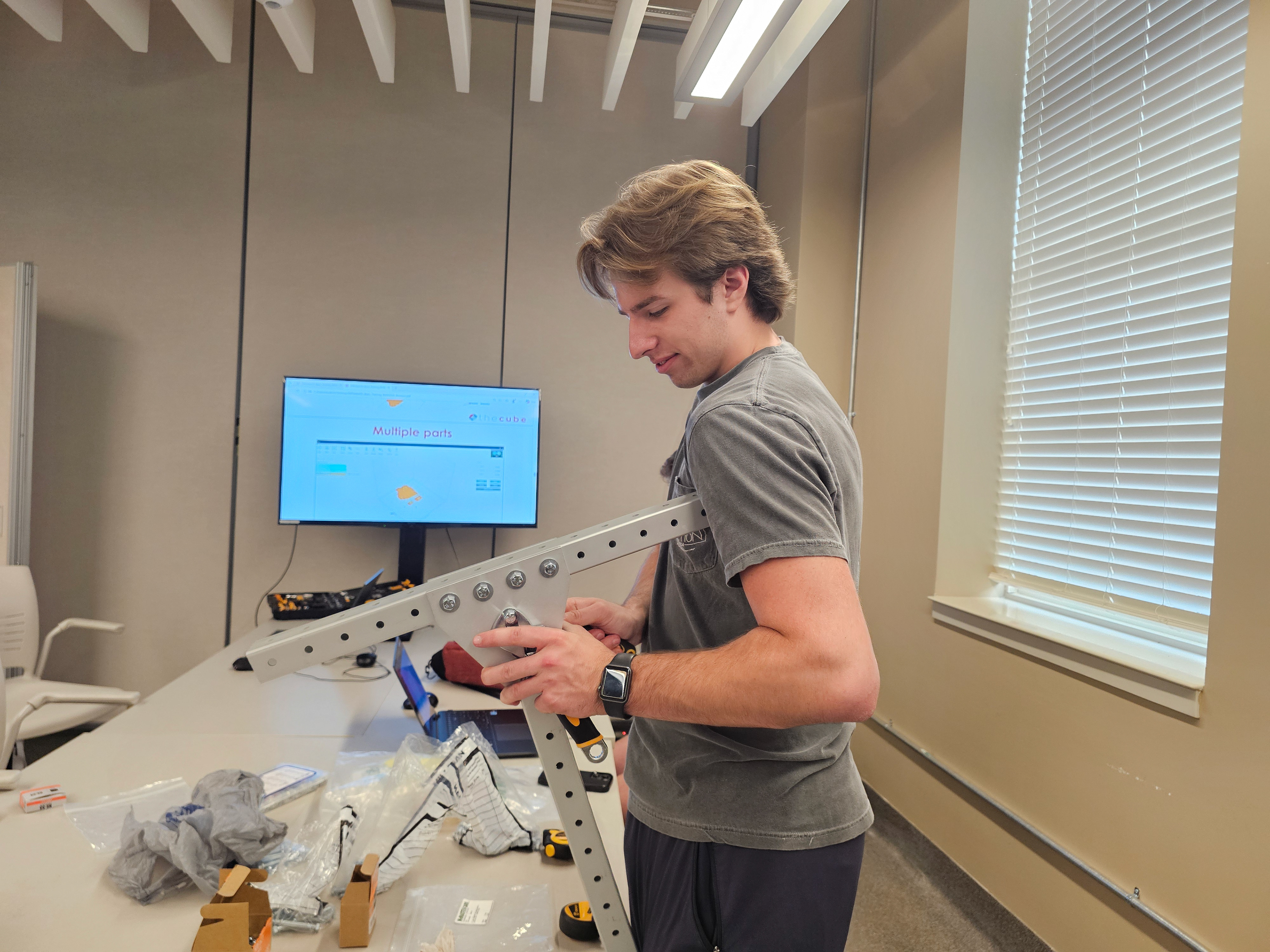
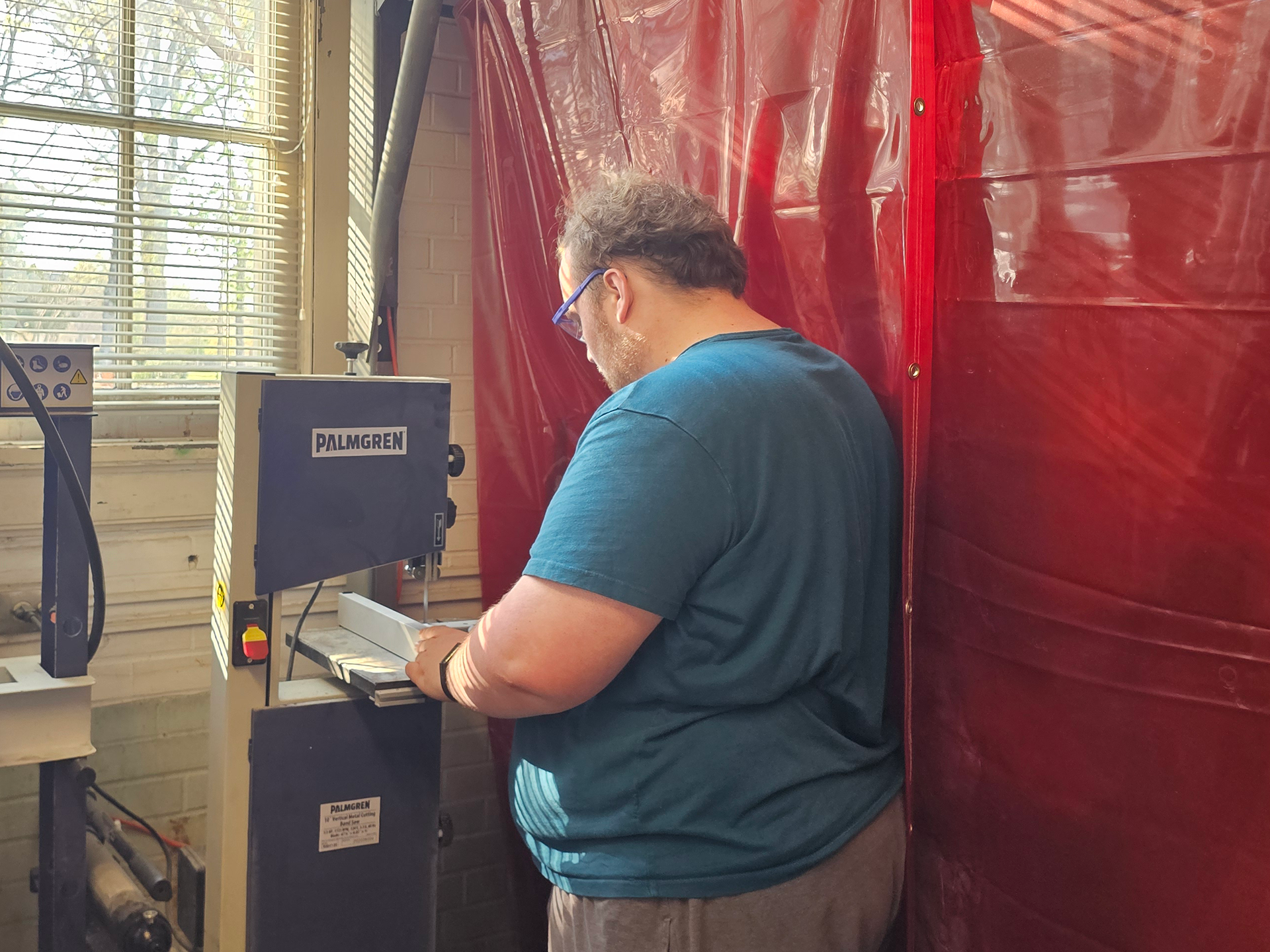
Team Members at work
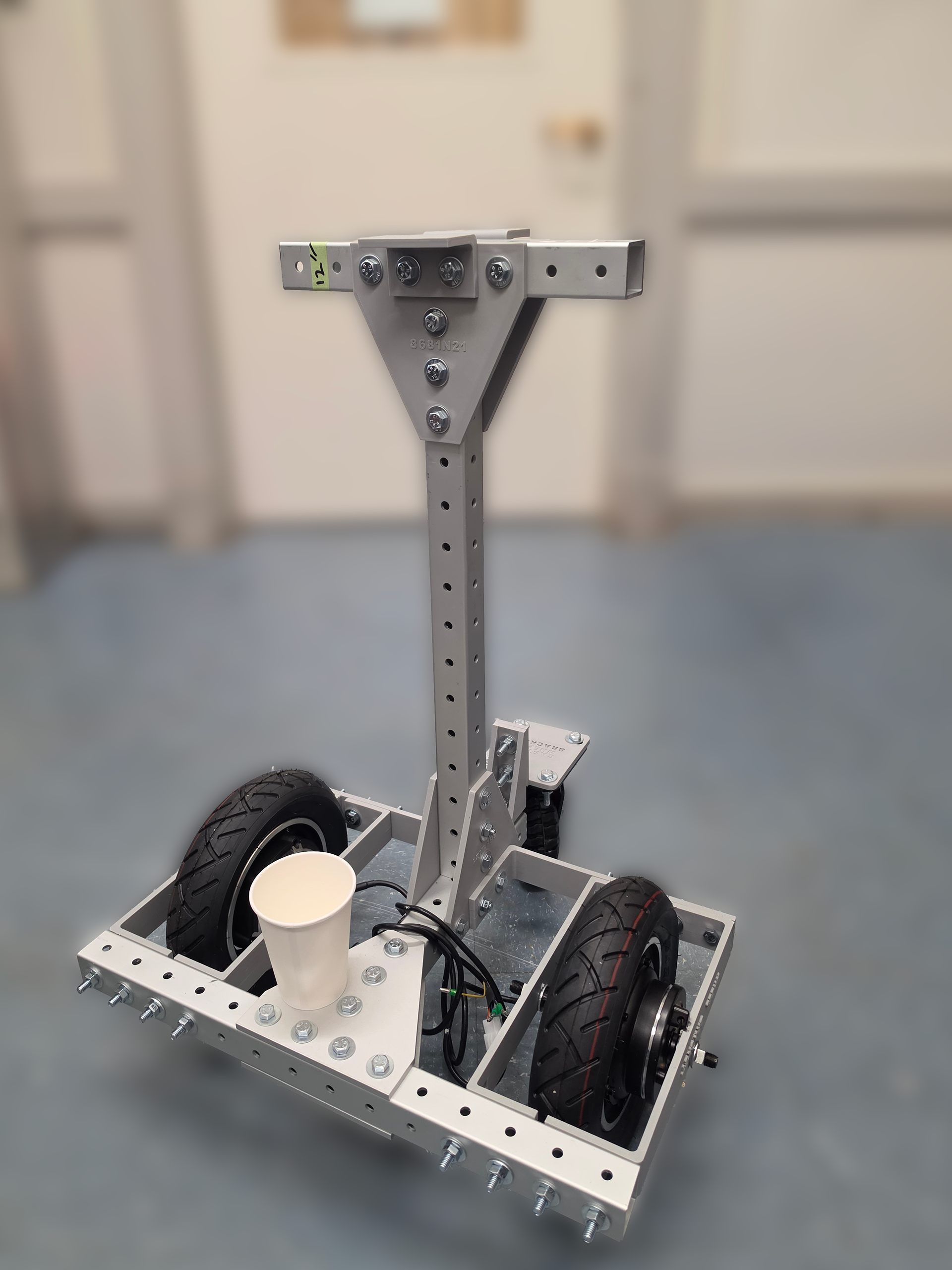
Body substructure, coffee cup for scale.
Credit to April Berry for concept art